

September 16, 2026
Choosing the right vacuum truck is not simply a matter of selecting the largest tank or the most familiar configuration. The right equipment depends on how your business operates, what you are pumping, how much material you handle, and where the load will be taken after collection.
There is not a lot of room for mistakes in a vacuum truck purchase. The equipment needs to perform reliably in the field, support your service schedule, meet application and compliance requirements, and fit the way your crews actually work. A mismatch can lead to unnecessary cost, inefficient routes, difficult maintenance, or equipment that does not perform as expected.
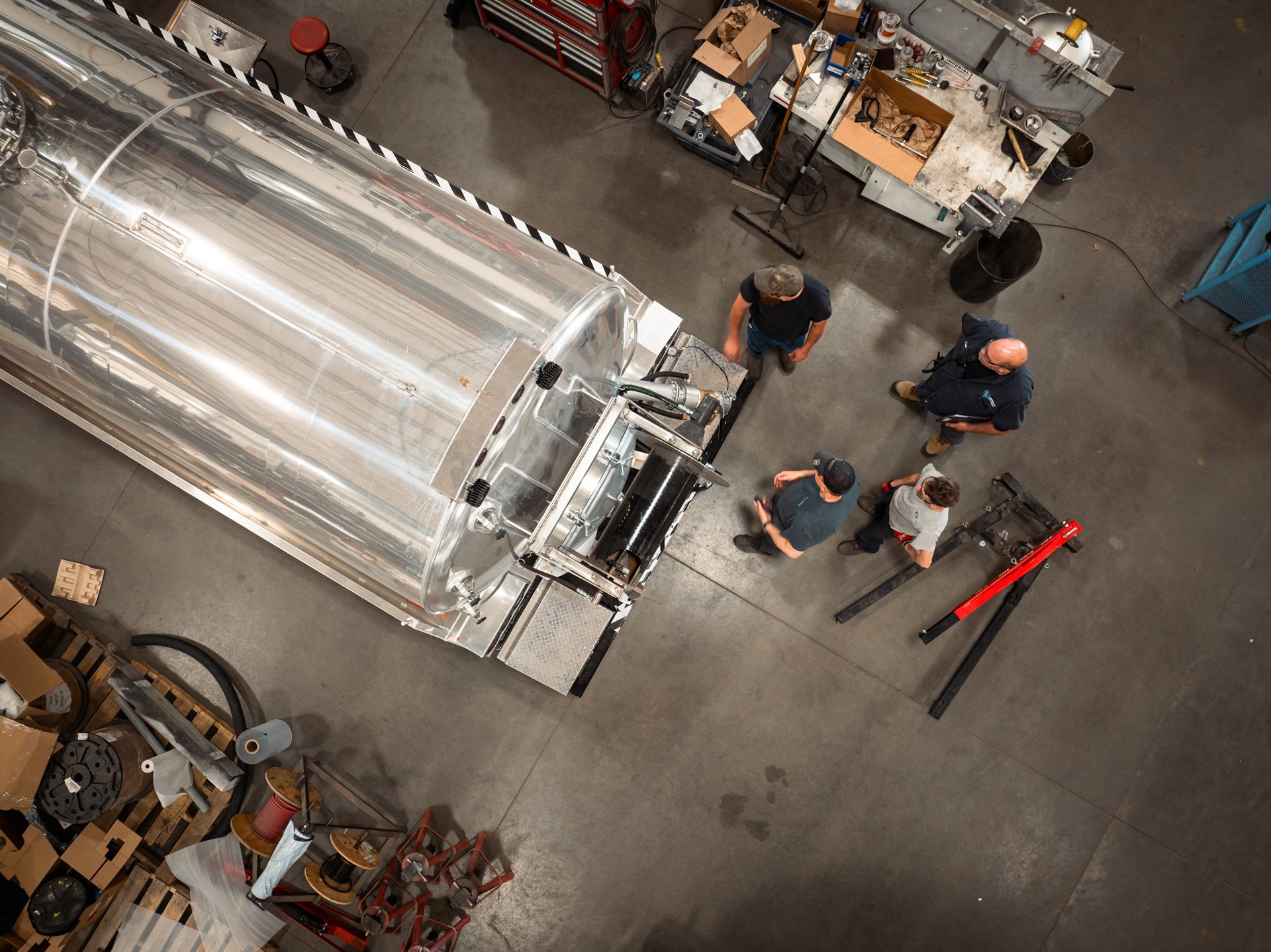
That is why the selection process should begin with a detailed conversation about your operation. At Imperial Industries, our team works with customers throughout the process, from the initial consultation through design, fabrication, testing, delivery, and support. We ask the questions that help define the right build, make recommendations along the way, and adjust the design when customer input points to a better solution.
Start with the application, not just the tank size
Before comparing tank capacities, identify the work the vacuum truck must perform. A truck used for portable sanitation routes has different requirements than one used for grease trap cleaning, rural waste management, industrial facility maintenance, or municipal service work.
Imperial’s recommendations begin with questions such as:
- What application will the truck support?
- How much material will be pumped during a typical day or service cycle?
- What exactly is being pumped?
- How often will the equipment be used?
- Where is the dump site, and how far will the truck travel between collection points and disposal?
- Are routes tight, remote, seasonal, or high-volume?
- Do you need rinse water onboard?
- Does the unit need to be permanently mounted, or would a removable system work better?
- Are there sanitation, transport, environmental, or municipal requirements to consider?
These details affect more than tank size. They can influence the tank material, pump package, chassis, compartment layout, hose configuration, handling requirements, and the overall balance between capacity and maneuverability.
Why the consultation matters
A vacuum truck is a major operational investment, and the best configuration is not always obvious at the beginning of a project. The equipment that works well for one route or waste stream may be a poor fit for another.
Imperial takes a consultative approach because application details matter. Our team listens to how customers plan to use the equipment, then offers recommendations based on the expected workload, material, route, disposal location, and operating conditions. If a customer provides input that would improve the build, Imperial can evaluate those suggestions and make changes where appropriate.
That collaborative process helps customers avoid making decisions based only on a standard specification sheet. It also creates better alignment between the equipment being designed and the work it needs to perform.
The process typically considers:
- Consultation: Understand the application, workload, material, route, dump site, and operational goals.
- Design: Recommend a truck, tank, pump, material, capacity, and configuration that match the requirements.
- Fabrication: Build the equipment in-house with control over the critical manufacturing steps.
- Assembly and testing: Inspect and test the unit so it is ready for its intended work.
- Delivery and support: Help the customer move from completed equipment to dependable field operation.
The goal is not to force every customer into the same build. It is to help each operation choose equipment that fits its actual requirements.
Learn more about the Imperial process, from consultation and design through fabrication, testing, delivery, and support
When a septic truck is the right choice
Septic trucks are often the best fit for operations that need dependable transport, containment, and service performance under frequent use. They are a strong option when uptime matters, waste loads are corrosive, and crews depend on predictable daily performance.
Best applications for septic trucks
Septic trucks are commonly used for:
- Residential and commercial septic maintenance
- Environmental and wastewater services
- Construction site waste management
- Municipal and county septic programs
- Agricultural and rural waste management
- Industrial facility maintenance
Questions to answer before choosing a septic truck
For a septic truck, the most important details often include the expected volume per route, the material being pumped, the distance to the dump site, and the frequency of service. These factors help determine whether a higher-capacity tank, a particular pump package, or a specific chassis is appropriate.
A septic truck is usually the right fit when you need:
- A dedicated truck-and-tank solution
- Higher-volume waste hauling capacity
- Durability in harsh, corrosive service environments
- Stable operation during transport
- Consistent fleet performance across repeat routes
Imperial septic trucks are built to your specifications for demanding field work. Continuous welds, engineered internal structures, material selection, and in-house fabrication help support structural integrity, serviceability, and long-term reliability.
When a portable restroom truck makes more sense
Portable restroom trucks are designed for mobile sanitation work where service efficiency, repeatability, and reliability directly affect customer commitments. If your business services portable restrooms on recurring routes, at events, in parks, or at construction sites, this category is often the most practical choice.
Best applications for portable restroom trucks
Portable restroom trucks are well suited for:
- Portable sanitation servicing
- Event sanitation servicing
- Temporary sanitation at construction sites
- Municipal or park district waste management
- Seasonal and remote location sanitation
Questions to answer before choosing a portable restroom truck
Portable sanitation operators should consider the number of units serviced per route, seasonal demand, event volume, expected service frequency, route length, and disposal access. These details help determine the capacity and layout needed to keep crews moving efficiently.
This type of truck is often the best fit when your team needs:
- Service-friendly layouts for faster day-to-day work
- Reliable route performance across repeat stops
- Fleet uniformity for multi-unit operations
- Equipment that can handle frequent transport and repeated use
- Compliance readiness for regulated waste handling environments
For businesses where route efficiency drives profitability, a portable restroom truck helps keep schedules on track while supporting easier serviceability and dependable field performance.
When a slide-in tank is the better option
Not every operation needs a permanently dedicated vacuum truck. Slide-in tanks are a practical solution when flexibility matters as much as suction capability. These systems let operators add vacuum capability when needed and remove the unit when the truck is needed elsewhere.
Best applications for slide-in tanks
Slide-in tanks are commonly used for:
- Portable restroom maintenance
- Grease service
- Agricultural and rural waste management
- Disaster relief and emergency sanitation
- Specialized field applications requiring a removable, self-contained unit
Questions to answer before choosing a slide-in tank
When evaluating a slide-in tank, consider the truck’s payload and axle ratings, how often the unit will be loaded and unloaded, whether onboard rinse water is needed, and whether the tank will be used for one application or several.
A slide-in tank is often the right choice when you need:
- Flexibility across routes, seasons, or service demands
- A removable unit instead of a dedicated chassis
- Waste-only or water-plus-waste compartment options
- Faster deployment for changing jobs
- Practical handling for repeated loading and unloading
Imperial slide-in tanks are built with continuous welds, disciplined fabrication, and structural features designed for repeated handling. For operators trying to expand capability without locking one truck into a single setup, a slide-in tank can provide a flexible, self-contained solution.
When a specialty truck is the right fit
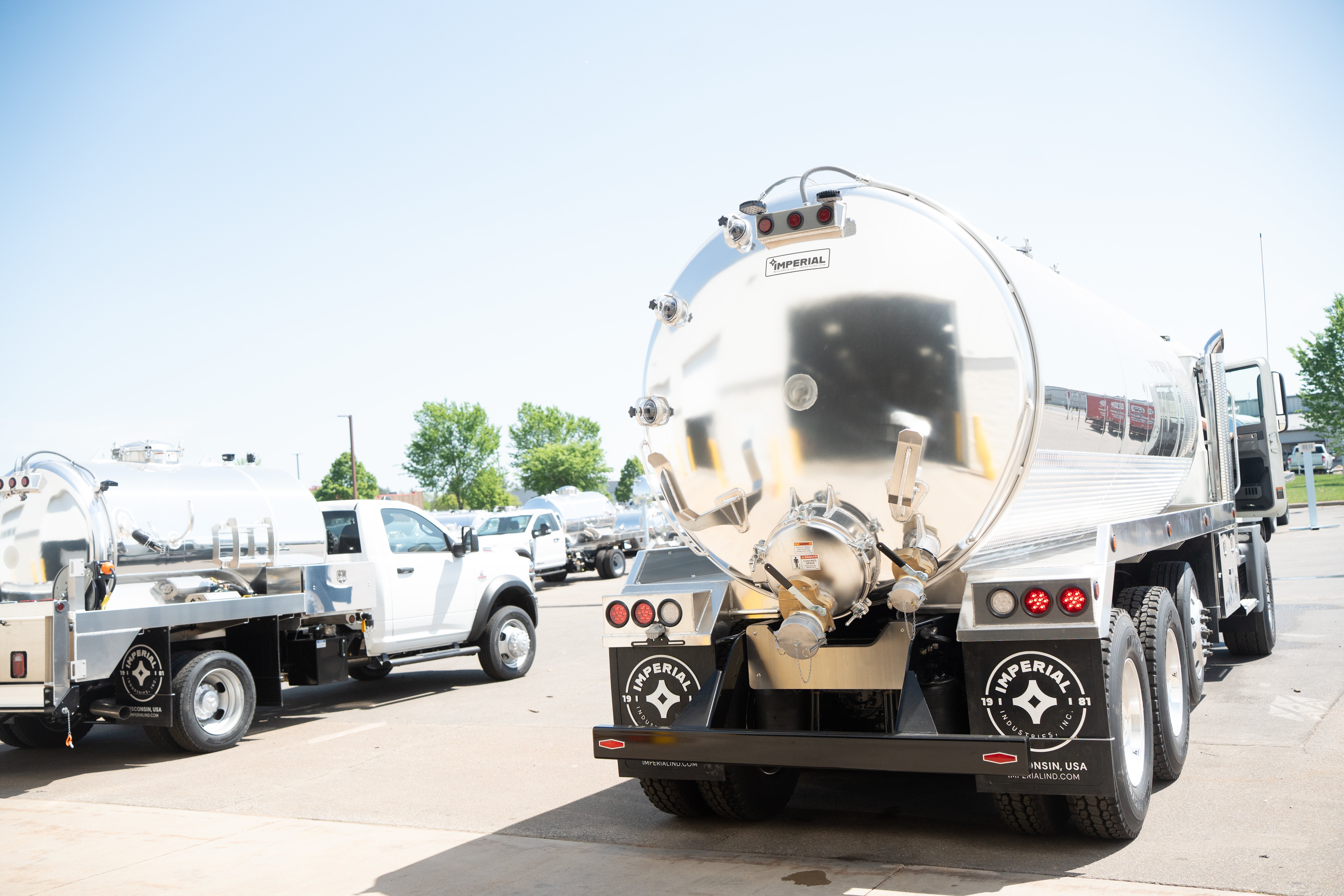
Some applications place unusual demands on equipment. Waste characteristics, service conditions, site access, operating procedures, or compliance expectations may call for a more application-specific build. That is where specialty trucks come in.
Best applications for specialty trucks
Specialty trucks are often considered for:
- Grease trap cleaning
- Oil and gas field service
- Municipal and utility work
- Industrial facility maintenance
- Car wash pit cleaning
- Custom service environments with unique tank engineering requirements
Questions to answer before choosing a specialty truck
Specialty applications require a close look at the material being pumped, the operating environment, the required service cycle, the available access points, the disposal process, and any safety or compliance requirements. A detailed consultation can help identify which features are necessary and which options would add unnecessary complexity.
A specialty configuration may be the right fit when your operation needs:
- Application-specific engineering
- Equipment built for corrosive or harsh conditions
- Features that improve serviceability and controlled handling
- Greater confidence in safety and compliance expectations
- A custom-built tank designed around the realities of the job
For operations with specialized waste streams or tougher field demands, a custom truck can help avoid compromises that come from forcing a standard configuration into a non-standard job.
Key factors to compare before you buy
Once you identify the likely equipment category, compare options based on the factors that matter most to your operation.
1. Application and material
The application defines the work the truck must perform. The material being pumped affects tank materials, pump requirements, cleanout needs, corrosion considerations, and maintenance planning. Be specific about the waste or liquid being collected rather than relying on a broad category alone.
2. Volume and route frequency
Estimate how much material will be pumped during a typical service cycle and how often the truck will be used. A larger tank may reduce trips to the dump site, but it can also add weight and affect maneuverability. The right capacity balances workload, payload, route length, and disposal access.
3. Dump site and disposal logistics
The location of the dump site is an important part of equipment selection. Long travel distances may increase the value of additional capacity, while short routes with frequent disposal access may favor maneuverability and faster service cycles. Discussing disposal logistics early helps avoid designing a truck around assumptions that do not match the route.
4. Dedicated truck vs. removable system
If the truck will perform vacuum work full time, a dedicated septic or portable restroom truck may make the most sense. If the vehicle needs to support multiple uses across changing conditions, a slide-in tank may offer more flexibility.
5. Serviceability and maintenance
Downtime affects schedules, revenue, and customer commitments. Look for builds that support easier cleaning, practical access, exact-match replacement parts availability, and consistent fabrication standards that simplify fleet maintenance.
6. Compliance readiness
Many operations need equipment that supports sanitation, transport, environmental, or municipal requirements. Choosing a build designed with compliance readiness in mind can help reduce surprises during inspection, delivery, and operation.
7. Durability and build quality
Vacuum equipment works in demanding conditions. Continuous welds, reinforced structures, disciplined fabrication, and single-source accountability all help support long-term reliability.
Why Imperial’s approach is different
Imperial Industries does more than fabricate a tank and place it on a chassis. The team works with customers to understand the full operating situation before recommending a configuration.
That means asking what the truck will do, how much it will pump, what it will pump, where it will dispose of the load, and what conditions it will face in the field. It also means continuing the conversation as the design develops.
Customer suggestions and changes are part of that process. When new information shows that a different capacity, layout, material, pump, compartment, or other configuration would better support the application, Imperial can review the recommendation and adjust the build accordingly.
This level of collaboration helps create:
- Better alignment between the equipment and the application
- More confidence in capacity and route planning
- Fewer surprises during fabrication and delivery
- A clearer understanding of how the equipment will be used
- Single-source accountability from consultation through support
Imperial’s equipment is designed and built in-house with a focus on structural integrity, predictable performance, and quality work. The company’s single continuous weld approach across tanks and silos, where appropriate, supports durability and leak resistance in demanding service environments.
A simple way to narrow your options
Use this framework as a starting point, then confirm the choice through a detailed application review:
- Choose a portable restroom truck if your work centers on mobile sanitation routes, events, construction sites, and repeat service efficiency.
- Choose a septic truck if you need a dedicated, higher-capacity solution for wastewater, septic, municipal, rural, or industrial service work.
- Choose a slide-in tank if flexibility, removable deployment, and multi-use truck capability are priorities.
- Choose a specialty truck if your application involves grease, utility, industrial, oil and gas, pit cleaning, or other custom service conditions.
Choose equipment based on how your business works
The right vacuum truck should fit the way your business actually operates, not just a generic equipment category. When the build matches the application, material, volume, route, dump site, service schedule, and field conditions, your team is in a better position to work safely, reduce downtime, and serve customers consistently.
Imperial Industries designs and fabricates vacuum trucks and tanks in-house for operators who need dependable equipment built to their specifications. Whether you are comparing portable restroom trucks, septic trucks, slide-in tanks, or specialty trucks, the selection process should be collaborative and grounded in real operating requirements.
The goal is straightforward: help you choose a truck that is built for demanding environments, ready for the work ahead, and supported by people who stay involved beyond delivery.
Ready to discuss the right build?
If you are evaluating a new truck, replacing an existing unit, or expanding your fleet, Imperial Industries can help you work through the decision. Share your application, expected pumping volume, material, dump site, route conditions, and operational goals so the team can recommend a configuration that fits your business.
Request a quote to start the conversation.