

September 30, 2026
When planning a new bulk storage project, one of the first questions many teams ask is whether welded vs. bolted silos make more sense for their facility. The answer depends on more than upfront cost. It also involves material characteristics, site conditions, maintenance expectations, operating environment, and long-term reliability.
For plant managers, engineers, and procurement teams, silo construction method can affect structural integrity, installation planning, inspection requirements, and lifecycle performance. In this article, we break down the practical differences between welded and bolted silos, where each option may fit, and what to evaluate before making a final decision.
What Is the Difference Between Welded and Bolted Silos?
At a basic level, the difference comes down to how the silo shell is manufactured and assembled.
Welded silos
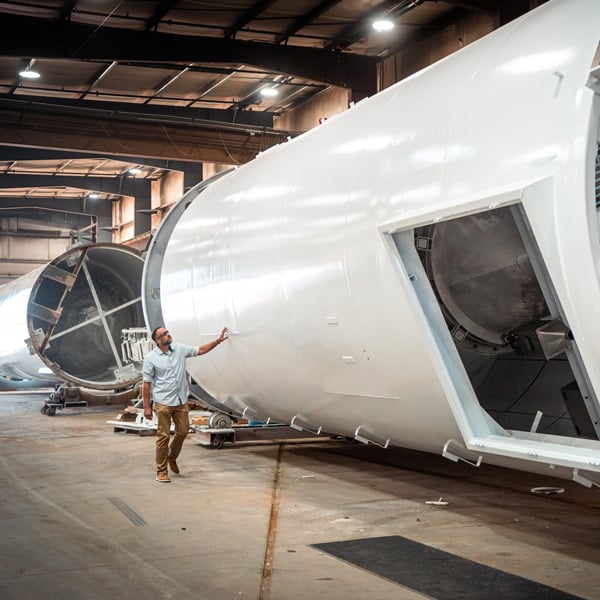
Welded silos are fabricated from steel sections that are joined by welding to form a continuous structure. Depending on the design and project scope, much of the fabrication work is completed before delivery, with final installation coordinated for the site.
Bolted silos
Bolted silos are made from individual panels or sections that are fastened together with bolts during field assembly. These designs are often selected when shipping constraints, modular installation, or future disassembly are major priorities.
While both designs can be appropriate in the right application, the construction method influences how the silo performs over time.
Why Construction Method Matters in Industrial Storage
A silo is not just a container. It is a working asset that has to manage material loads, environmental exposure, filling and discharge cycles, and the realities of day-to-day operations. That means the way a silo is built can affect:
- Structural integrity under repeated use
- Resistance to weather and environmental exposure
- Risk of leaks or contamination points
- Maintenance planning over the life of the asset
- Installation complexity and project scheduling
- Long-term reliability in demanding environments
For operations that cannot afford preventable downtime, these factors deserve careful review early in the buying process.
Benefits of Welded Silos
Welded steel silos are often chosen for applications where durability, long service life, and a more unified structure matter most.
1. Strong structural continuity
Because welded silos are joined into a continuous shell, they can provide strong structural continuity across the vessel. That matters in demanding environments where material loads, vibration, weather exposure, and repeated loading cycles place ongoing stress on the structure.
2. Fewer mechanical joints
Bolted connections create multiple seams and fastening points throughout the structure. Welded construction reduces the number of mechanical joints that may require periodic inspection, sealing attention, or maintenance over time.
3. Better fit for harsh operating environments
For many industrial applications, storage equipment must hold up under challenging conditions such as moisture, abrasive materials, temperature swings, or corrosive exposure. A welded design is often preferred when teams want a heavy-duty solution built for demanding environments.
4. Clean, integrated construction
Welded silos can support a more integrated structure, which may be beneficial for facilities prioritizing structural integrity, controlled material handling, and a long-term installation strategy.
Where Imperial Industries Stands Out
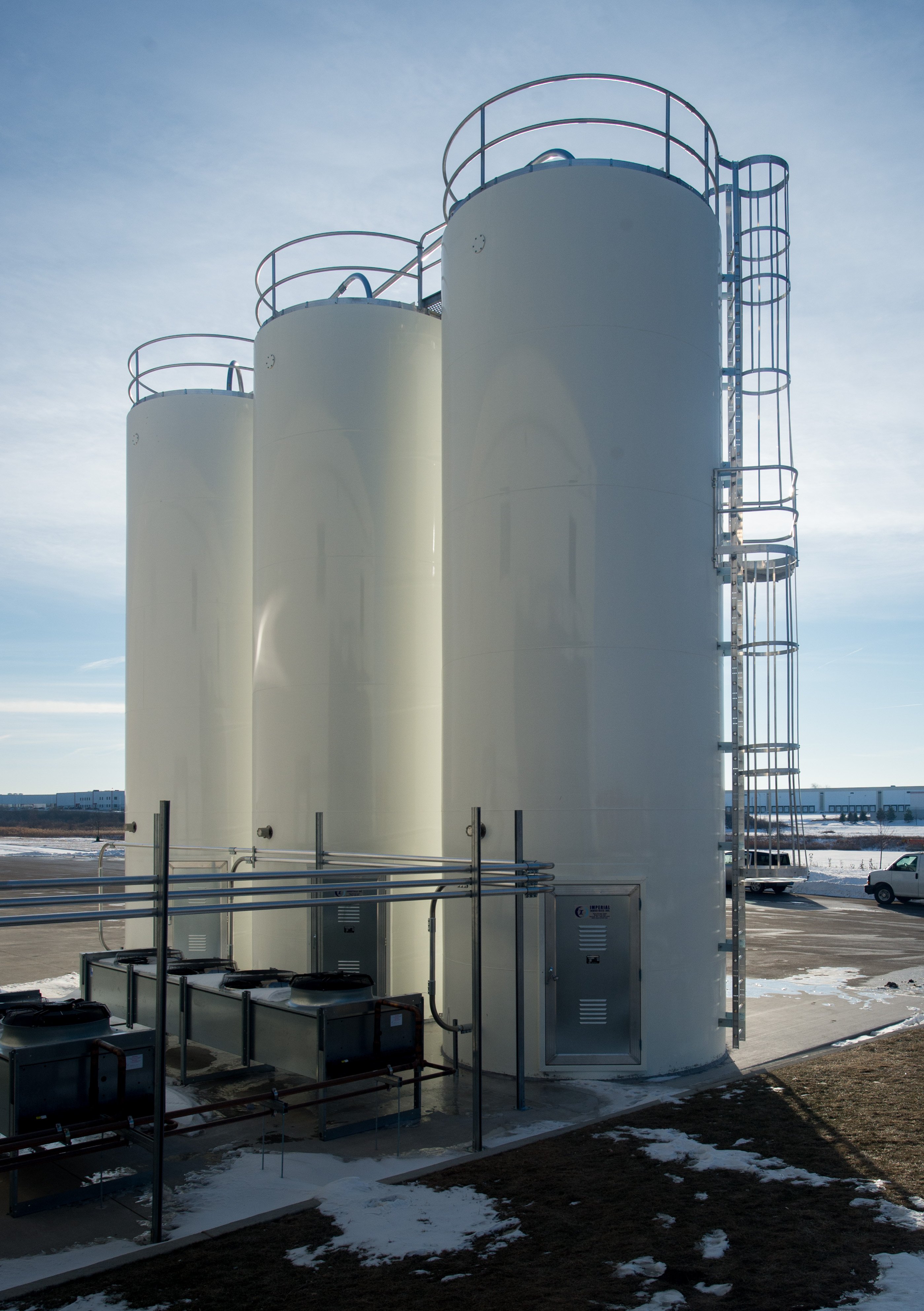
Not all welded silos are built the same way. At Imperial Industries, one of the key differentiators in our industrial storage tanks and silos is the use of a single continuous weld on all of our tanks and silos.
That approach supports:
- Continuous Welds for improved structural integrity
- Heavy-duty construction for long-term reliability
- In-House Fabrication for tighter quality control
- Single-Source Accountability from design through fabrication and support
For customers planning permanent storage projects, this matters because construction quality affects durability, performance, and confidence over the long term. Imperial designs and builds in-house, helping customers move from concept to delivery with one accountable partner.
.jpg?width=2048&height=1536&name=1-IMG_5957(2).jpg)
Benefits of Bolted Silos
Bolted silos can be a practical choice in certain situations, especially when modularity or field assembly is a primary project requirement.
1. Easier transport in some cases
Because bolted silos are shipped in sections or panels, they may be easier to transport to sites with shipping constraints or access limitations.
2. Field assembly flexibility
For some projects, assembling a silo on site from pre-manufactured parts can simplify logistics. This can be useful where site access, crane planning, or transportation size restrictions shape the installation approach.
3. Potential disassembly or relocation
In operations where future relocation is a real possibility, bolted construction may offer advantages because the system can be disassembled more readily than a permanently welded structure.
That said, modularity should be weighed against the operational demands of the application. What helps during transport or installation may not always align with the priorities of long-term service conditions.
Welded vs. Bolted Silos: Key Factors to Compare
If your team is evaluating welded vs. bolted silos, focus on the questions that will affect performance after installation.
Operating environment
Will the silo be exposed to moisture, corrosive conditions, abrasive materials, or frequent load cycling? Demanding operating conditions often call for a storage solution built with durability and structural integrity in mind.
Material being stored
Bulk solids vary widely. Plastic pellets, food ingredients, chemicals, minerals, and wastewater-related materials all create different design requirements. Material characteristics should guide decisions around construction method, internal flow considerations, and long-term maintenance expectations.
Installation requirements
How much of the project complexity is tied to transportation, crane access, site layout, and field labor? Bolted systems may help in some site conditions, while welded solutions may better support facilities planning for a permanent installation.
Maintenance expectations
What level of routine inspection, sealing review, and long-term service planning is acceptable for your operation? The right answer depends on how critical uptime is and how much maintenance capacity your team has available.
Project timeline and lifecycle goals
Are you solving a short-term capacity need, or investing in infrastructure meant to support operations for many years? Long-term goals often change how buyers evaluate the tradeoffs between modular convenience and a more unified heavy-duty build.
Common Mistakes to Avoid When Choosing a Silo
Too often, buyers evaluate silo construction based only on initial price or installation assumptions. That can create problems later.
Here are a few common mistakes to avoid:
- Choosing based on upfront cost without considering lifecycle maintenance
- Underestimating the effect of harsh operating conditions on long-term performance
- Failing to match silo design to the stored material and discharge requirements
- Treating all welded or all bolted designs as equivalent
- Overlooking fabrication quality and accountability during the build process
The more demanding the application, the more important it becomes to evaluate how the silo is engineered, fabricated, and supported after delivery.
Which Option Is Right for Your Facility?
There is no one-size-fits-all answer in the welded vs. bolted silos discussion. Bolted silos may make sense when modular shipping, on-site assembly, or future relocation are top priorities. Welded silos are often the better fit when long-term durability, structural integrity, and performance in demanding environments are higher priorities.
For many industrial facilities, the decision comes down to this: are you optimizing primarily for transport and modular assembly, or for long-term strength and reliability in service?
If your operation needs a durable storage solution built to your specifications, it helps to work with a partner that understands the real conditions your equipment will face.
Final Thoughts on Welded vs. Bolted Silos
When comparing welded vs. bolted silos, the right choice depends on your material, site, installation needs, and operating expectations. The construction method shapes more than the installation process. It can influence maintenance requirements, structural integrity, and long-term value.
Imperial Industries builds industrial bulk storage tanks and silos for demanding applications, with a single continuous weld on all tanks and silos as a key differentiator in our approach. That focus on disciplined fabrication, in-house quality control, and long-term reliability helps customers invest with greater confidence.
If you are evaluating storage options for a new project, contact Imperial Industries to discuss your application and determine which silo design fits your operation.
Need help selecting the right storage silo for your material, site, and operating conditions? Contact Imperial Industries to talk through your project.