

September 2, 2026
Vacuum truck downtime is easy to underestimate until it starts affecting the entire workday. When a truck is out of service, the impact goes far beyond one delayed route or one unavailable crew. It can disrupt scheduling, reduce billable work, increase labor pressure, create service bottlenecks, and put customer commitments at risk.
For septic service companies, portable sanitation operators, municipalities, and environmental services firms, vacuum truck uptime is closely tied to profitability and customer trust. The visible repair bill is only part of the problem. In many cases, the bigger cost comes from the operational disruption that builds while the truck is unavailable.
At Imperial Industries, we know uptime depends on more than one repair. It is shaped by how a truck is built, how it is maintained, and how quickly operators can get the right parts and support when issues happen.
In this article, we break down the hidden cost of vacuum truck downtime, highlight common causes of unexpected failures, and share practical ways to reduce preventable interruptions.
Downtime Costs More Than the Repair Invoice
When a vacuum truck goes down, the first number most teams look at is the repair invoice. That matters, but it rarely tells the full story. The larger financial impact usually comes from everything surrounding the repair.
Hidden costs can include:
- Lost revenue from jobs that cannot be completed
- Overtime or schedule compression for available crews
- Delayed service that affects customer satisfaction
- Extra wear on backup equipment
- Administrative time spent rescheduling routes and dispatching crews
- Compliance or documentation pressure if maintenance issues affect inspection readiness
- Emergency parts sourcing or rushed service decisions
A single day of downtime can ripple through an entire operation. If one truck is central to daily capacity, one failure can affect multiple stops, operators, and customer commitments.
Lost Revenue Adds Up Quickly
For many operators, a vacuum truck is a revenue-producing asset every day it is on the road. When that asset is unexpectedly parked, the business may lose scheduled work immediately.
That loss is not always limited to one missed job. Downtime can force a company to:
- Push work into later dates
- Decline new service requests
- Reassign crews inefficiently
- Extend route times with fewer available trucks
- Miss opportunities during peak demand periods
In high-demand service environments, even a short interruption can reduce weekly capacity. If the issue affects a high-use truck or specialized configuration, the impact can be even greater because there may be no easy substitute in the fleet.
Labor Costs Continue Even When the Truck Is Idle
Downtime does not stop payroll. Drivers, helpers, dispatchers, and technicians may still be on the clock while operations are adjusted around the issue.
That creates added labor costs such as:
- Paid time for drivers who cannot complete planned work
- Overtime for other operators covering delayed routes
- Maintenance labor pulled into urgent repairs instead of planned service
- Office time spent coordinating schedule changes with customers and crews
These costs are easy to overlook because they are spread across different parts of the business. Over time, however, they can become just as significant as the repair itself.
Customer Schedules and Service Commitments Take a Hit
Vacuum truck operations often run on tight service schedules. Customers depend on timely pickups, cleanings, and maintenance visits. Municipal teams also work under public service expectations and operational deadlines.
When a truck is down, teams may need to reschedule work, combine routes, or delay non-urgent jobs. Even when customers understand the situation, repeated disruptions can reduce confidence over time.
The longer-term cost may show up as:
- Frustration from repeat schedule changes
- Pressure on customer relationships
- Reduced confidence in service reliability
- More reactive planning across the operation
Reliable equipment supports more than output. It helps protect the consistency customers expect.
Backup Equipment Has a Cost Too
Some fleets rely on spare units or older backup equipment to absorb downtime. That can help in the short term, but it is not without cost.
Using backup equipment may lead to:
- Higher fuel or operating costs
- Lower efficiency compared with primary units
- More wear on aging assets
- Additional maintenance demand across the fleet
- Operational compromises if the backup truck is not configured for the same work
What begins as one truck issue can quickly become a broader fleet management problem.
Common Causes of Unexpected Vacuum Truck Downtime
Not every breakdown comes out of nowhere. According to Imperial’s sales team, some of the most common issues that lead to unexpected downtime include:
- PTO failure
- Driveline failure
- Vacuum pump issues
- General truck-related mechanical issues
These problems often show warning signs before they become serious enough to pull a truck out of service. That is why routine inspections and preventive maintenance matter so much in vacuum truck operations.
Other common maintenance-related issues can include:
- Worn gaskets
- Damaged valves
- Cracked fittings
- Clogged vents
- Pump or blower performance issues
- Corrosion or material wear in high-use environments
When these issues are caught early, operators usually have more flexibility to schedule service, source the right parts, and reduce disruption. When they are ignored, the repair often becomes more urgent, more expensive, and more disruptive.
The Fleet Mistakes That Make Downtime Worse
In many cases, the biggest problem is not the initial issue. It is waiting too long to address it.
Imperial’s team regularly sees a few preventable mistakes that increase the risk of downtime:
- Waiting too long to respond to problems
- Delaying scheduled maintenance
- Skipping visual inspections
- Slacking on preventive pump maintenance
These habits may seem minor in the moment, especially when crews are busy and trucks need to stay on the road. But over time, they increase the chance that a manageable issue becomes a major repair.
Routine visual inspections help operators catch leaks, looseness, wear, and performance concerns before they interrupt the workday. Preventive pump maintenance is especially important because pump performance directly affects how the truck does its job. When pump maintenance slips, reliability often follows.
Construction Quality Influences Long-Term Uptime
Not all downtime is caused by maintenance habits alone. Equipment design and build quality also affect long-term reliability.
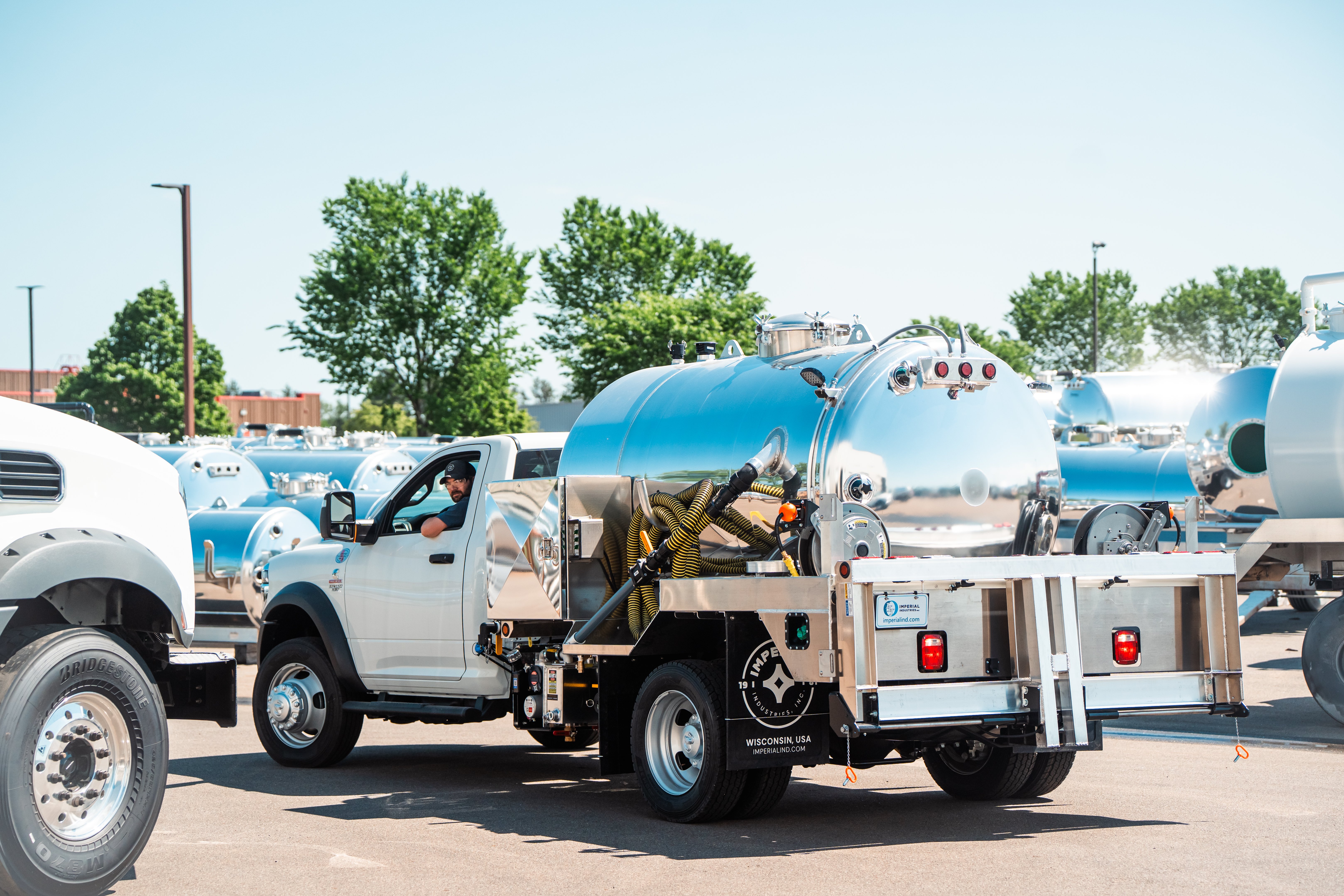
For fleets operating in demanding sanitation, industrial, and environmental applications, truck and tank construction matter. Structural integrity, fit-up quality, material selection, and serviceability all influence how well equipment holds up under repeated use.
At Imperial Industries, durability starts with how the equipment is built. Features such as heavy-duty construction, serviceable designs, and continuous weld construction can support long-term reliability and help equipment stand up to harsh waste conditions.
Imperial’s in-house fabrication approach also gives customers a practical advantage. When engineering, fabrication, welding, testing, and support are aligned under one roof, customers can often get more consistent build quality, clearer communication, and faster answers when service questions come up.
Parts Availability and Support Affect Recovery Time
Even well-built equipment needs service eventually. When it does, the speed and accuracy of support become important.
Downtime often lasts longer when operators struggle to:
- Identify the correct replacement part
- Reach someone who understands the equipment
- Coordinate repair decisions quickly
- Get practical service guidance without unnecessary back-and-forth
This is where exact-match replacement parts and responsive service support can make a meaningful difference. When fleets can get the right parts and talk to people who know the equipment, they can reduce delays and make more confident repair decisions.
At Imperial Industries, support does not stop after delivery. Access to exact-match replacement parts and practical service guidance helps customers reduce downtime and keep trucks working with less guesswork.
How to Reduce the Hidden Cost of Vacuum Truck Downtime
No fleet can eliminate every repair event, but operators can reduce preventable downtime and limit the effect of disruptions.
A practical approach includes:
1. Build a maintenance plan around actual use
High-use trucks should be serviced according to real operating conditions, not just a general schedule.
2. Do regular visual inspections
Routine walkarounds can help teams catch wear, leaks, loose components, and other developing issues early.
3. Stay ahead of pump maintenance
Preventive pump maintenance is one of the simplest ways to reduce unnecessary downtime.
4. Address small issues before they grow
PTO, driveline, pump, valve, gasket, vent, and fitting issues are easier to manage when caught early.
5. Choose equipment designed for long-term reliability
Construction quality, structural integrity, and serviceability affect total cost over time, not just purchase price. Continuous weld construction
1 and in-house fabrication can support long-term durability.
6. Work with a partner that provides support beyond delivery
Responsive service guidance and exact-match replacement parts can help reduce repair delays when problems happen.
Downtime Is Really a Total Cost of Ownership Issue
The hidden cost of vacuum truck downtime is really a total cost of ownership issue. Purchase price matters, but long-term operating value depends on uptime, serviceability, durability, and the ability to keep equipment working in the field.
A lower upfront cost may not stay lower if the truck creates more interruptions, more labor pressure, more missed work, and more service complications over time. That is why many buyers look closely at how a truck is built, how replacement parts are supported, and how responsive the manufacturer will be after delivery.
Conclusion
Vacuum truck downtime affects more than the maintenance budget. It can reduce revenue, increase labor costs, disrupt service schedules, strain customer relationships, and create added pressure across the fleet.
The most effective way to reduce the hidden cost of downtime is to look beyond repair invoices and focus on the full operational picture. Reliable construction, practical maintenance planning, routine inspections, preventive pump care, exact-match replacement parts, and responsive service support all play a role in helping fleets stay productive.
At Imperial Industries, we build equipment for demanding environments and support customers with in-house fabrication, durable construction, exact-match replacement parts, and service guidance that helps keep equipment working in the field.
If your team is evaluating new equipment, replacement parts, or ways to improve vacuum truck uptime, Imperial Industries can help.
Need help improving vacuum truck uptime or planning your next build? Contact Imperial Industries to speak with a product specialist or request a quote.